
A Delta on the Edge
Paikgacha, in the Khulna district of southwest Bangladesh, sits on some of the most climate-exposed land on Earth. The villages here are low, flat, and laced with rivers that rise and fall with the Bay of Bengal. When cyclones like Aila, Amphan, and most recently Remal swept through, they did not just make headlines for a week — they changed the shape of daily life for years.
Each storm leaves the same quiet damage behind: embankments breached, ponds poisoned with salt water, harvests lost, and families forced to start over with less than they had before.
What Climate Change Looks Like From a Village
From a coastal village, climate change is not a graph — it is a list of very practical problems:
- Salt water creeping into ponds, wells, and rice fields, making both drinking water and farming harder every year
- Stronger, less predictable cyclones and storm surges
- Riverbank erosion that swallows homesteads a few feet at a time
- Lost harvests that push families into debt or force them to migrate
The families facing these problems contributed almost nothing to the emissions behind them. Yet they are the ones who wade home through flooded courtyards and rebuild the same mud walls again and again.
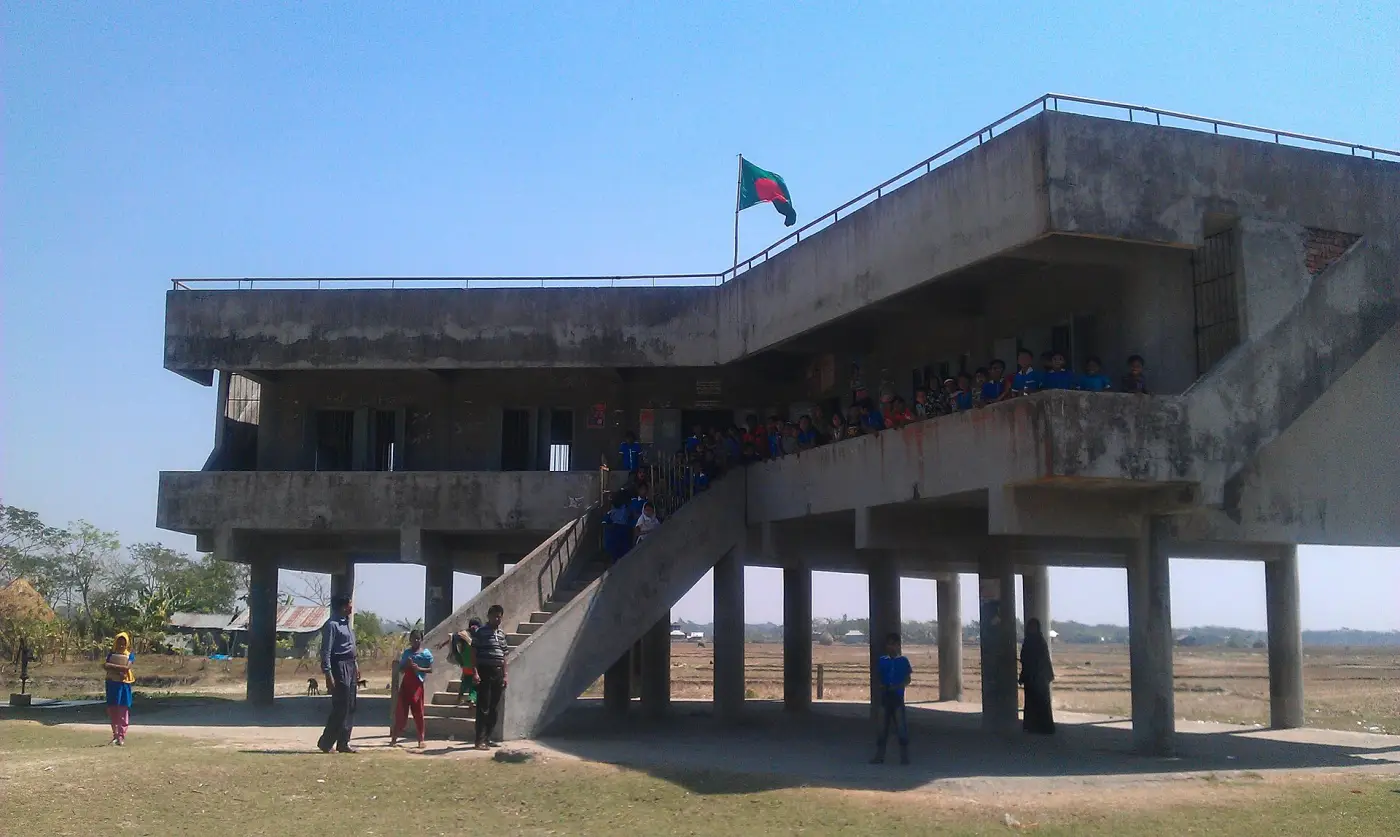
A raised cyclone shelter that doubles as a village school — safety and education under one roof.
Resilience Is Built Before the Storm
The most important lesson from decades of Bangladeshi disasters is simple: what saves lives is what was done before the storm. Early-warning messages passed from neighbour to neighbour. Cyclone shelters that double as schools. Homesteads raised on earthen plinths above flood level. Families who know exactly where to go and what to carry.
Bangladesh has become a quiet world leader in this kind of preparedness — and almost all of it happens at community level, through local people and local organisations.
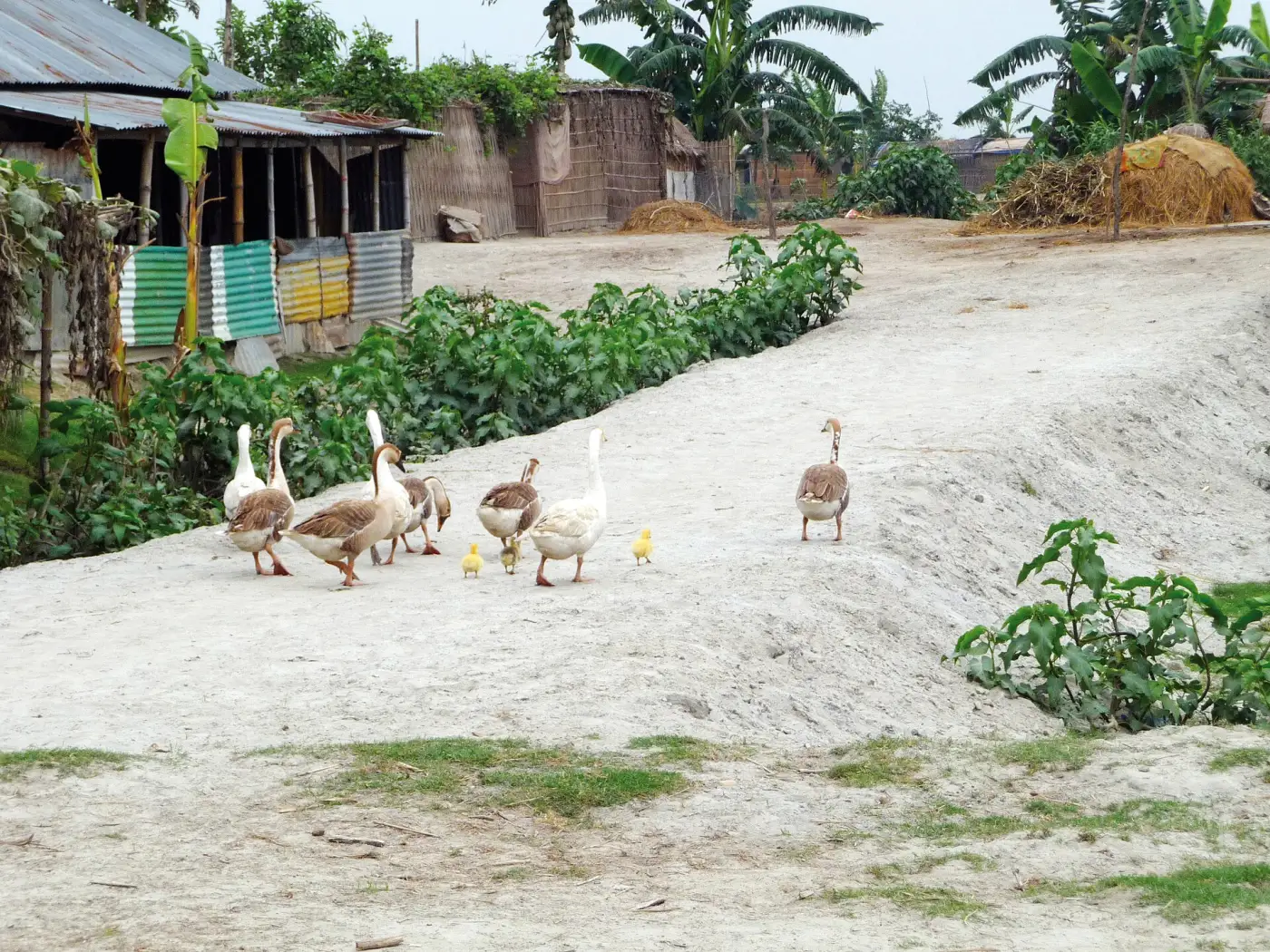
Homesteads raised on earthen plinths keep families, animals, and stored food above the flood line.
How CSSD Helps Communities Adapt
CSSD’s programs in Paikgacha are designed with this reality in mind. Adaptation is woven through everything we do:
- Tree plantation — thousands of saplings that anchor soil, break wind, and shade homesteads
- Organic kitchen gardens that recover quickly after flooding and cost almost nothing to replant
- Support for families rebuilding after cyclones, like our response after Cyclone Remal
- Awareness sessions so women, children, and the elderly know what to do when warnings come
None of this requires imported technology or massive budgets. It requires presence, trust, and consistency — the strengths of a grassroots organisation that lives where it works.
Hope Grows Here Too
It would be easy to tell only a story of loss. But that is not how the people of coastal Khulna tell it. They tell of embankments repaired by hundreds of hands, of children who practise cyclone drills the way others practise fire drills, of gardens replanted the week after the water fell. Resilience is not something donors bring to Bangladesh — it is something the coast already has, and something the world can choose to stand behind.